

Most homeowners in Alamance County don't think about their fascia until it's already a problem. By then, what started as a gutter issue has quietly turned into a carpentry bill. Here's what to look for before it gets that far.
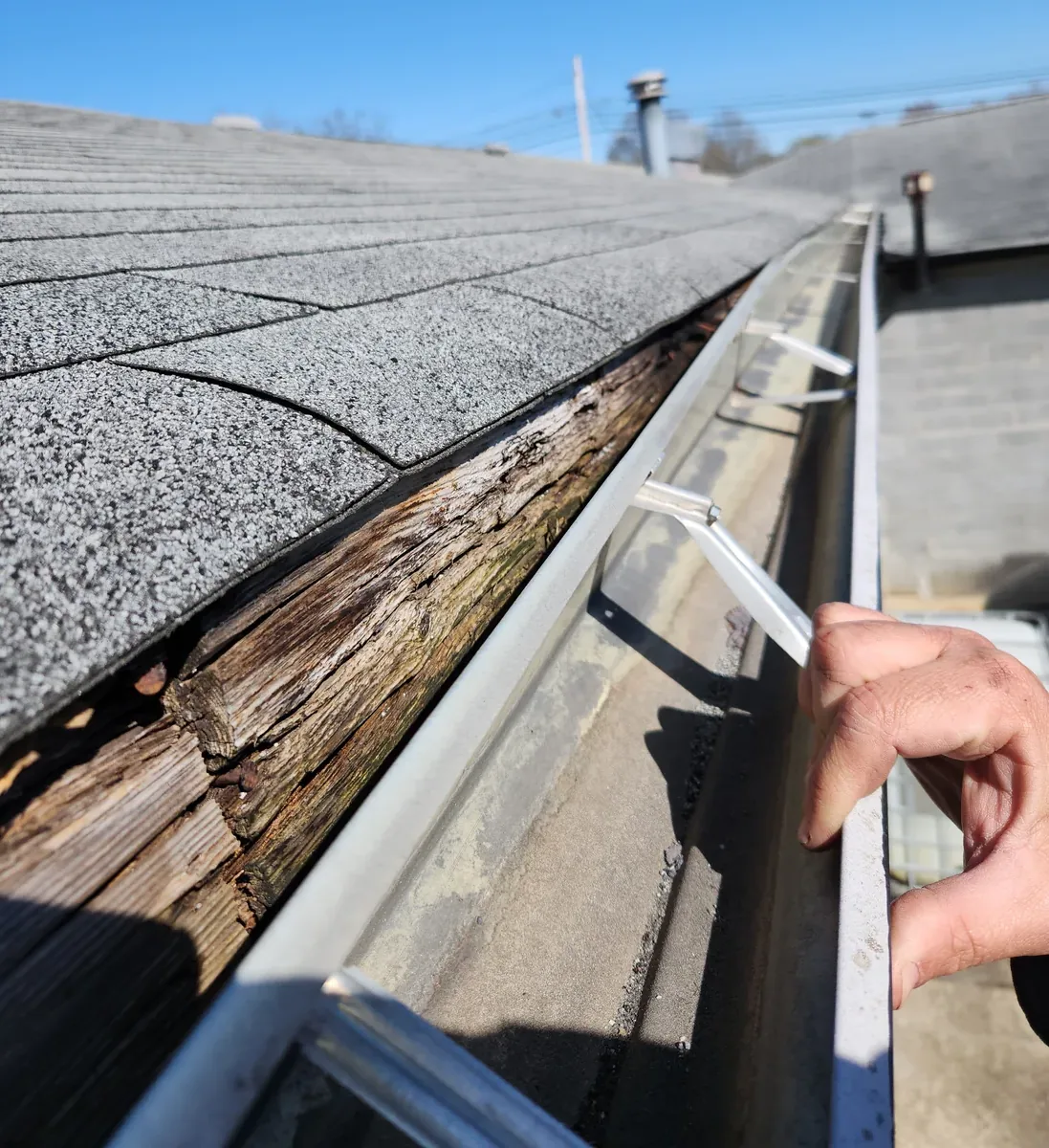
Know Your Roofline
Before the signs, a quick anatomy lesson, because these three terms get mixed up constantly.
The eave is the lower edge of the roof that extends past the exterior wall. The soffit is the finished underside of that overhang, the horizontal surface you see when you look up at the roofline from the ground. The fascia is the vertical board at the front edge of the roofline, the face your gutters mount to. Your gutters mount directly to the fascia. When the fascia fails, the gutters fail with it, and water gains a direct path to the soffit and the rafters tucked behind it.
Keeping the fascia dry is one of the most important things a properly functioning gutter system does.
A Quick Note on How Gutters Are Designed
Gutters are manufactured with the back wall intentionally taller than the front. In the event of overflow, water is designed to spill over the front lip, away from the house, rather than back toward the fascia. The design is sound. Where things go wrong is in the installation and maintenance around it.
Roof pitch, overhang length, and drip edge all influence how water leaves the roof and where it lands. When everything lines up correctly, the drip edge directs water off the roof deck and into the back of the gutter cleanly. When there is a gap between the back of the gutter and the fascia, from the gutter pulling away, an installation issue, or a mismatch in drip edge height, water follows that gap instead. It then runs directly down the face of the fascia on every rainfall.
Debris makes it worse. Leaves, shingle grit, and dirt that work behind the gutter act as a sponge, holding moisture against the fascia long after the rain stops.
The 5 Signs
1. Your gutters are pulling away from the house
Hangers screw into the fascia. When the wood softens, screws lose their grip and the gutter begins to separate from the roofline. If you notice a visible gap between your gutters and the house, the fascia behind them is likely the reason, not the hangers themselves.
2. Paint is peeling or bubbling along the roofline
Moisture trapped behind or beneath the gutter works its way out through the paint. Peeling or bubbling in that specific band along the roofline is often an early warning, appearing before the wood shows any visible deterioration.
3. You can see soft or dark spots when you look up
Any section of fascia that looks darker, softer, or visually different from the surrounding board deserves a closer look. A screwdriver tells you quickly: healthy wood resists, rotted wood gives.
4. Water drips behind your gutters during rain
Gutters that are clogged, pitched wrong, or separating from the fascia allow water to run behind them rather than through them. That water contacts the fascia on every rain event. Over an Alamance County spring, that adds up fast.
5. The same spot overflows every time it rains
Chronic overflow in one location means water is consistently hitting the same section of fascia. It may look fine today, but repeated soaking will eventually win.
Why Gutters Are Usually the Root Cause
Clogged gutters hold standing water that wicks directly into the fascia over time. Gutters with incorrect pitch channel water toward the board rather than toward the downspout. Sectional gutters with failing joint seals drip at every seam. And any gap between the back of the gutter and the fascia gives water a path it will find on every rainfall.
Seamless gutters eliminate the joint problem entirely, one continuous run with no seams along the length of the gutter. It does not solve a pitch or installation issue, but it removes one of the most common causes of water getting where it should not.
What Happens If You Ignore It
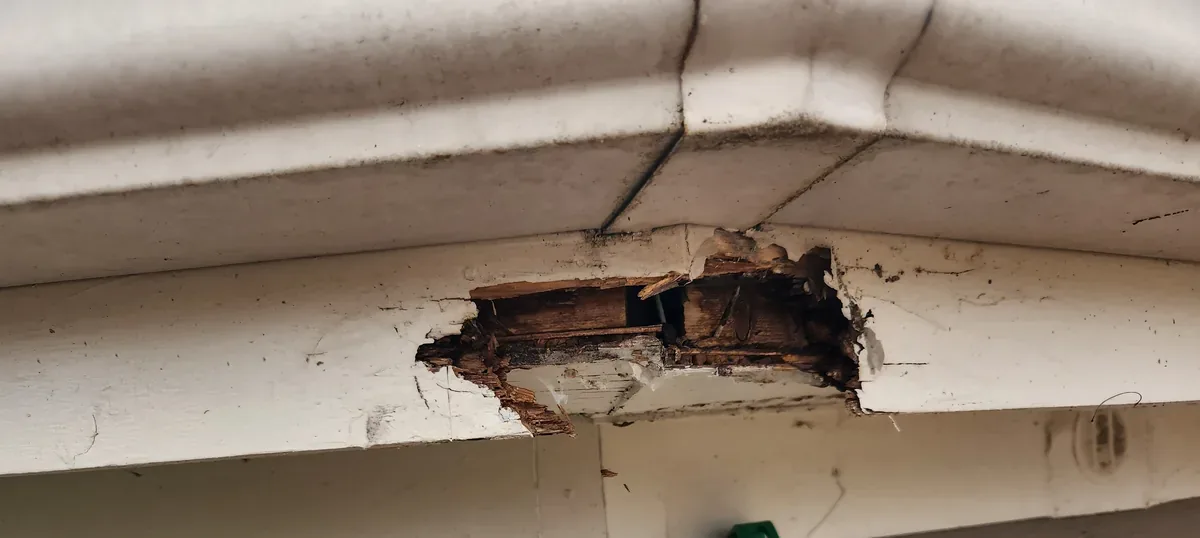
Rot does not stay put. It spreads from the fascia to the soffit, then to the rafters and roof decking. What starts as one bad fascia board can become a roofing and structural repair. New gutters cannot be properly installed into compromised wood, so the carpentry has to come first anyway.
What the Fix Looks Like
Caught early, the repair is straightforward: replace the affected fascia board, correct whatever gutter issue caused it, and move on. In most cases that means installing seamless gutters, which eliminate the joint seams where dripping and separation most often start. Caught late, you are looking at fascia plus soffit plus potentially rafter repair before gutters can go back up. Either way, fixing the gutter problem first is not optional. New fascia with the same drainage issue will follow the same path.
If you are in the Burlington, Mebane, Graham, or Hillsborough area and you are seeing any of these signs, we are happy to take a look during a free estimate visit. We will assess the gutters, the fascia, and what it will take to get it right the first time. Schedule your free estimate visit.
Ready for a Free Estimate?
We serve Mebane, Burlington, Graham, and all of Alamance County.