

Rain Chains in NC: What Alamance County Homeowners Should Know Before Installing One
If you've seen a rain chain hanging off someone's porch in Mebane or Burlington and wondered about adding one to your own home, you're not alone. They're one of the more common questions we get. Beautiful, functional in the right setting, and a legitimate alternative to a traditional downspout when installed correctly.
Here's what they are, how they perform in North Carolina's rainfall, and what to think about before you swap one out.
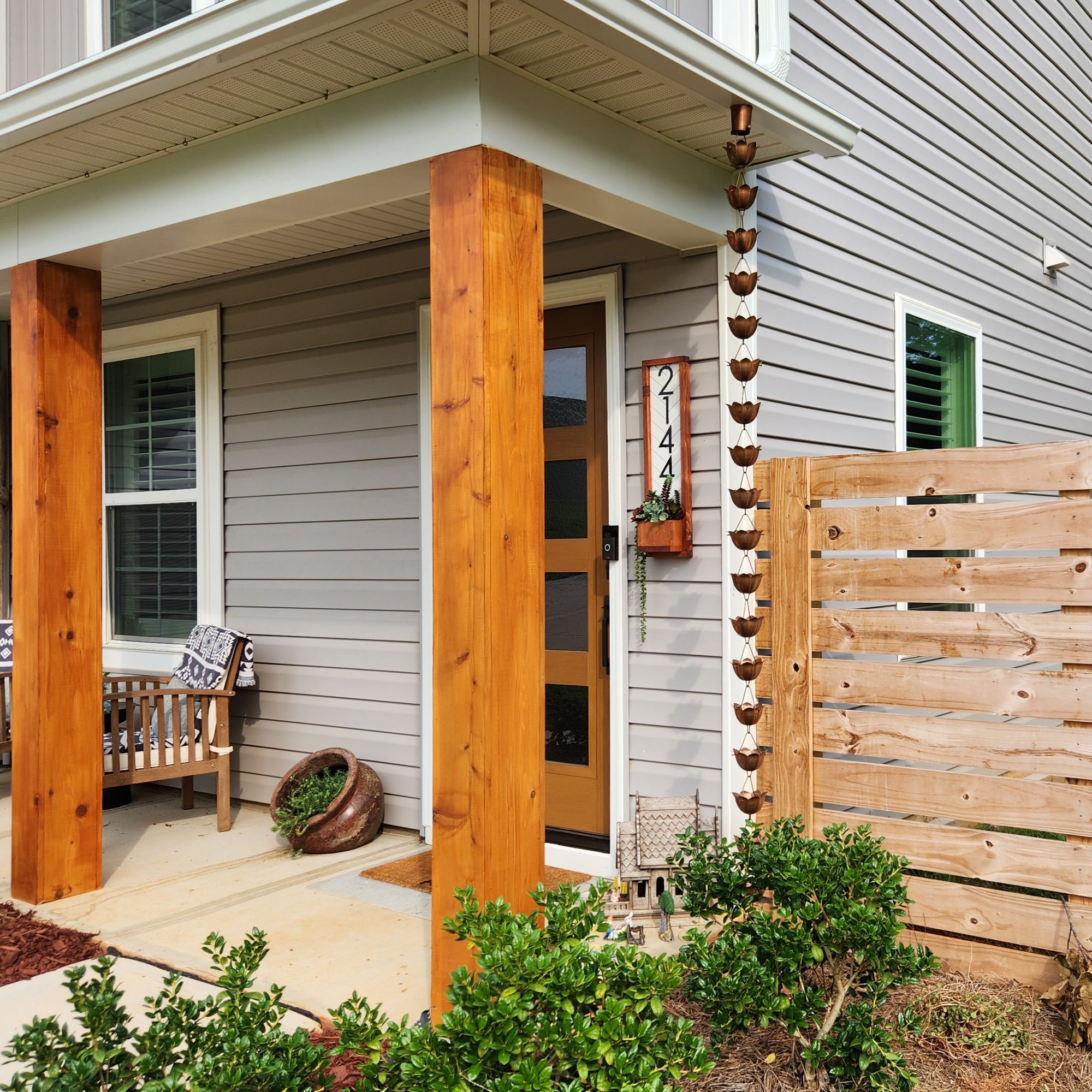
What Rain Chains Are
A rain chain hangs at the gutter outlet where a downspout would normally attach. When it rains, water runs from the gutter along the chain to the ground. Traditional downspouts move water inside an enclosed pipe. Rain chains move water visibly, down the outside of the chain.
They originated in Japan, where they've been used for centuries. In modern American homes they're mostly installed as a decorative upgrade at one or two downspout locations, often near an entry or garden bed where the visual effect is appreciated.
Two main styles:
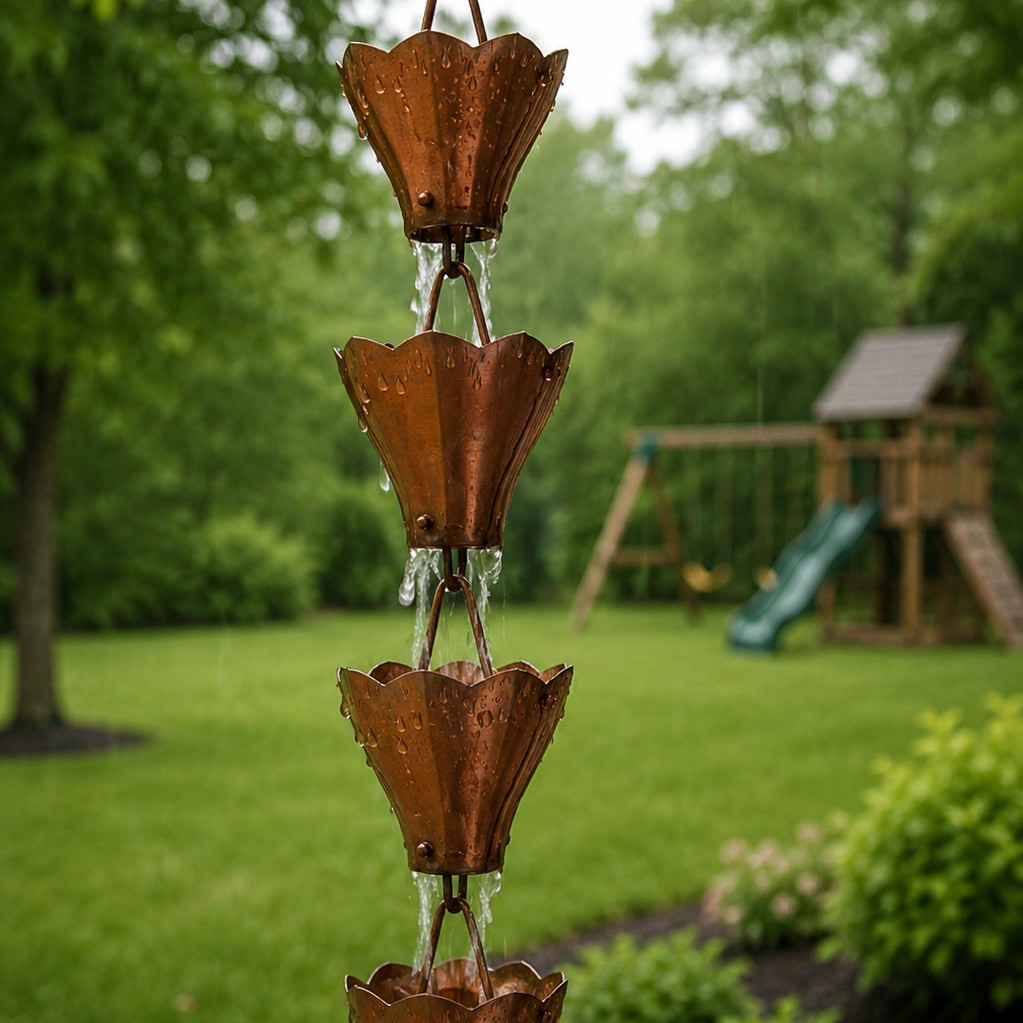
Cup style. Connected cups or bowls that catch and funnel water from one to the next. More controlled flow. Better in heavier rain. More expensive.
Link style. Open chain links without cups. Water runs down by surface tension. Works in light rain, less so when volume picks up.
For NC, cup style is almost always the better choice.
How They Perform in North Carolina Rain
This is the part most people don't ask about before they buy one.
North Carolina gets real rain. Alamance County averages around 46 inches of precipitation per year, with summer storms that can dump two inches in an hour. A traditional 4-inch round downspout handles roughly one inch of rain per hour from about 1,000 square feet of roof. Rain chains handle significantly less volume.
During a moderate rain, a well-installed cup-style chain drains fine and looks great doing it. During a heavy Piedmont thunderstorm, water will likely overflow the cups and flow straight down as a sheet. That's expected behavior, not a failure, but it matters where the chain terminates.
If the chain lands over a garden bed, drainage basin, or gravel with good percolation, overflow is no problem. If it's next to a foundation, that water needs to go somewhere intentional. Same rule as a downspout: water moves away from the house, not toward it.
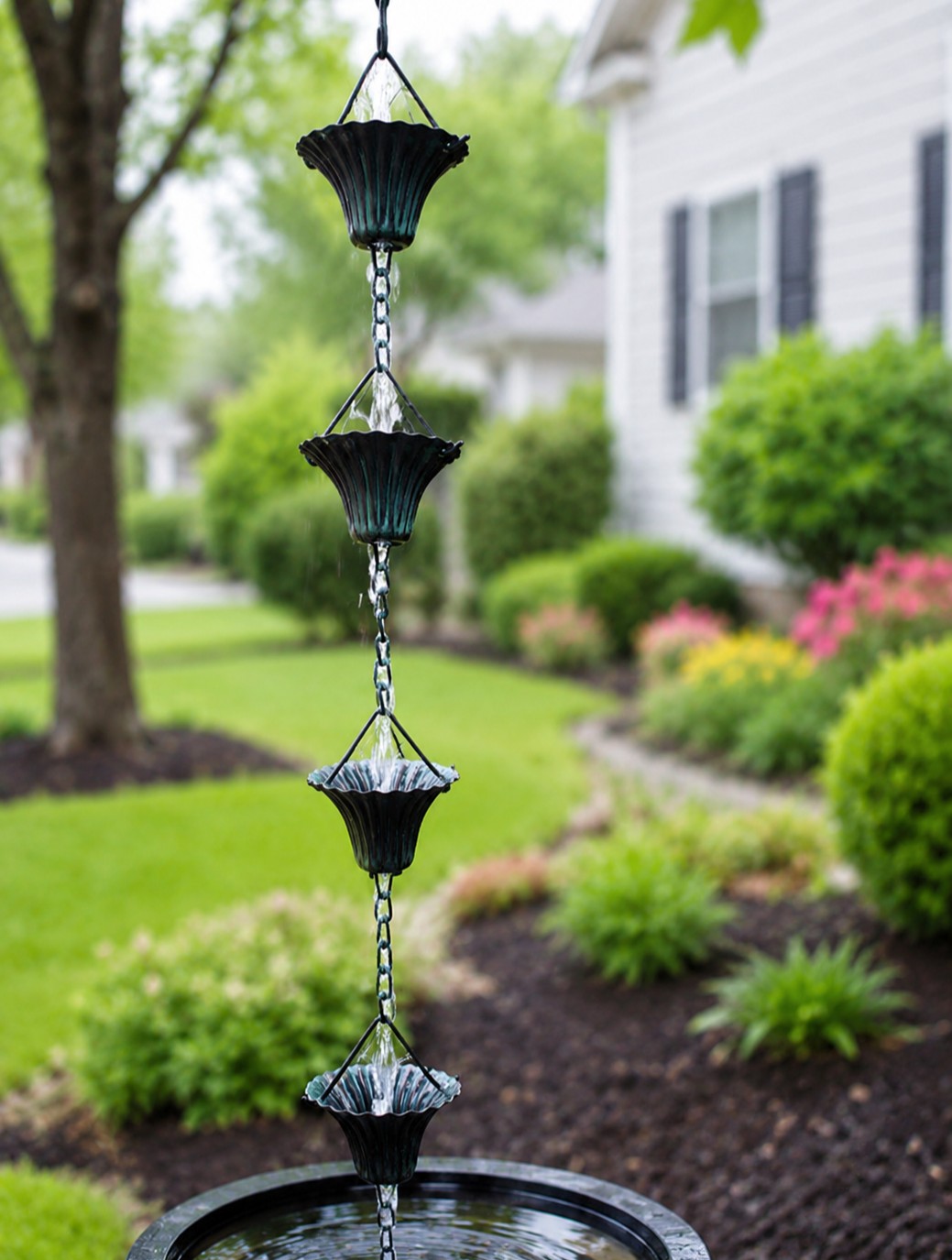
Where Rain Chains Work Well on NC Homes
Best applications:
- Locations where the visual effect is the point: front entry, covered porch, garden feature
- Landing areas with good drainage: gravel bed, rain barrel, permeable surface
- Secondary or accent downspout locations, where another downspout handles the bulk of the roof drainage
Where they're less ideal:
- Primary drainage for a large roof section
- Smaller roof overhangs that put the chain in close proximity to the siding and may invite mildew and wood rot
- Any location where overflow would pool near the foundation
- Homes on heavily shaded lots where the chain stays wet constantly and hardware corrodes faster
What Installation Looks Like
Replacing a downspout with a rain chain is straightforward. The gutter outlet stays. The downspout comes off. The chain hangs from a mounting hook or ring at the outlet, and the bottom is anchored or directed into a termination point to keep it from swinging in wind.
The termination matters as much as the chain itself. We typically recommend one of three options: a decorative basin that manages overflow, a buried drain that redirects water, or a gravel bed at least 18 inches from the foundation. Skipping the termination and letting the chain hang free is the most common mistake we see. In a wind-driven storm, an unanchored chain moves around and water ends up wherever it wants.
Cost and What to Expect
A quality cup-style chain for a standard 8-foot drop runs $40 to $120 for the hardware depending on material. Copper develops patina over time and is the most durable in outdoor exposure. Aluminum is lighter and won't rust. Steel connectors and mounting hardware are the most common failure point in a humid NC climate, so check those annually regardless of chain material.
A complete single-location install with proper mounting and a termination basin or drain typically runs $150 to $350 depending on what's involved.
Most homes we install them on do one or two locations at the entry or patio, with the remaining downspouts left as standard pipes.
One Thing to Check Before You Commit
Before replacing any downspout, take a look at where that water currently goes. Downspouts are positioned during installation to direct runoff to the lowest-impact spots on a specific property. Swapping one for a rain chain without understanding the drainage pattern occasionally surfaces a problem the original downspout was quietly solving.
This isn't a reason to skip rain chains. It's a reason to invest some time and consideration into drainage before you pull a downspout off the wall.
Frequently Asked Questions
Do rain chains work in heavy rain?
Cup-style chains manage moderate rain flow well. In heavy storms, which are common in the Piedmont through spring and summer, flow can exceed what the cups contain and water will run as a sheet. That's normal. Proper termination at the base handles this the same way a splashblock handles downspout overflow.
Can I install a rain chain myself?
Yes, basic installation is DIY-friendly. The main thing to get right is the termination point at the base. A chain that ends without a basin, anchor, or drain outlet will swing in wind and can scratch or stain siding. If you're not sure about the drainage situation at the base, that's worth a quick assessment before you commit.
How long do rain chains last?
Copper chains last decades with minimal care. The patina that develops on copper is protective, not damage. Aluminum lasts 15 to 20 years under normal conditions. Inspect mounting hardware and connectors annually, especially in humid climates like ours.
Will a rain chain void my gutter warranty?
Replacing a downspout doesn't affect the gutter itself, but some gutter guard warranties specify proper drainage configuration. If you have a gutter guard warranty, read the terms before removing a downspout.
Does Freedom Gutters install rain chains?
Yes. We can remove an existing downspout, install the chain with proper mounting hardware, and set up an appropriate termination point depending on your property. Call or reach out online for a quote on your specific location.
If you're in Mebane, Burlington, Graham, Gibsonville, or anywhere in Alamance County and want to talk through whether a rain chain makes sense on your home, it's a quick conversation and a free estimate.
Request a free estimate or call us directly at (336) 269-7345.
Ready for a Free Estimate?
We serve Mebane, Burlington, Graham, and all of Alamance County.