

A lot of homeowners assume sagging gutters just need a spike tapped back in. That's how a $300 repair turns into a $1,500 fascia job. By the time you see water staining on your siding or rot in the soffit, the gutter has been failing for months. Here's how to catch the real signs early, before the damage compounds.
Visible Sagging or Pulling Away From the Home
Walk around your house and look at the gutter line. It should be straight and sit tight against your fascia board. If sections are sagging downward or pulling away from the edge, that's a sign the gutters have failed structurally.
Sagging gutters can't drain properly. Water pools in the low spots instead of running toward the downspouts. This standing water puts weight on the gutter itself, which accelerates the damage. More importantly, that pooled water sits there and eventually seeps through the gutter seams, the fascia board, and into your attic or wall cavities.
Sagging also happens when gutters were never pitched correctly in the first place. A gutter needs a slight downward slope toward the downspout, typically one-quarter inch per 10 feet of length. Without that slope, water just sits. We see this a lot in older Alamance County homes where the pitch was eyeballed instead of measured.
If your gutters are sagging, replacement is usually the answer. The damage is structural, and patching won't fix the underlying design problem.
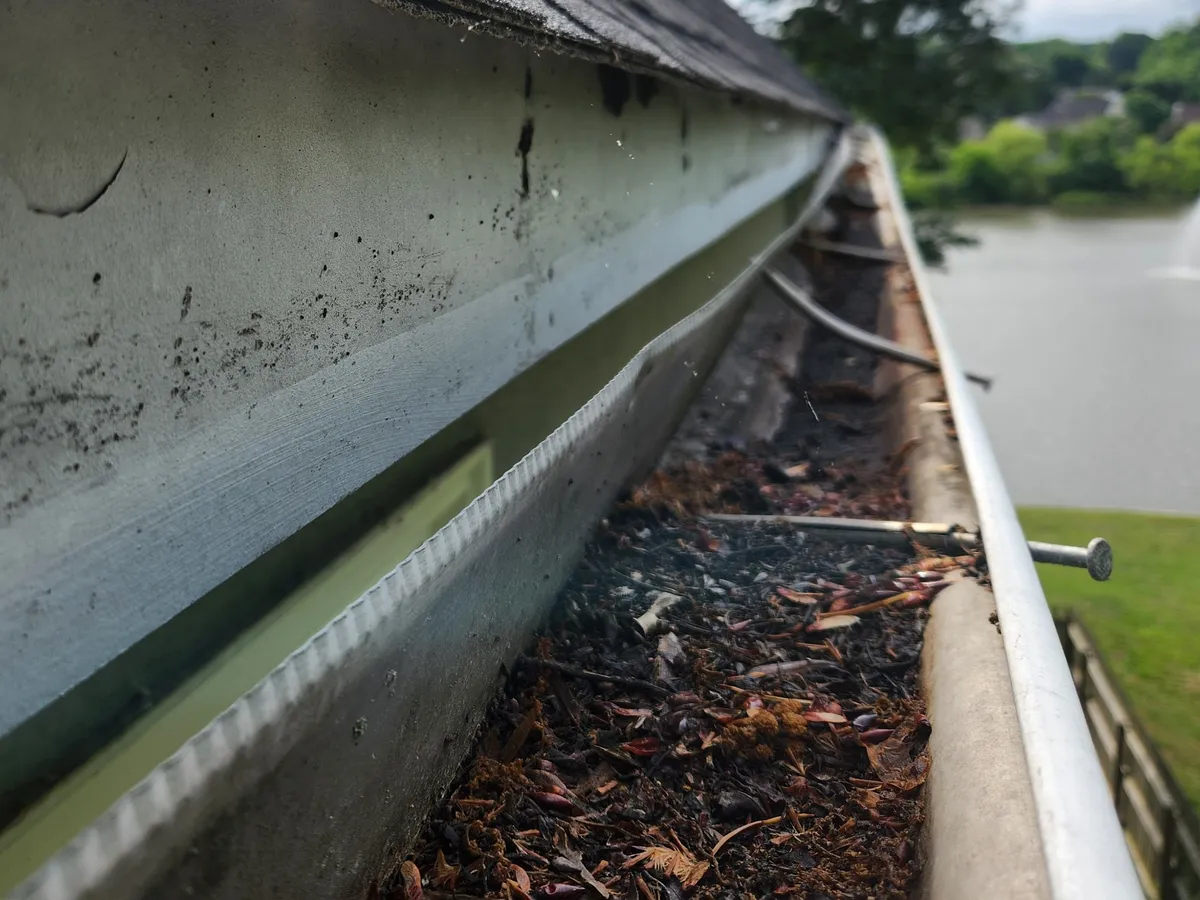
Holes and Damage That Affects Gutter Pitch
Aluminum gutters don't rust, but they can be damaged by falling branches, ice dam pressure, or debris impact. More important than the damage itself is what that damage does to the gutter's ability to hold its pitch and drain properly.
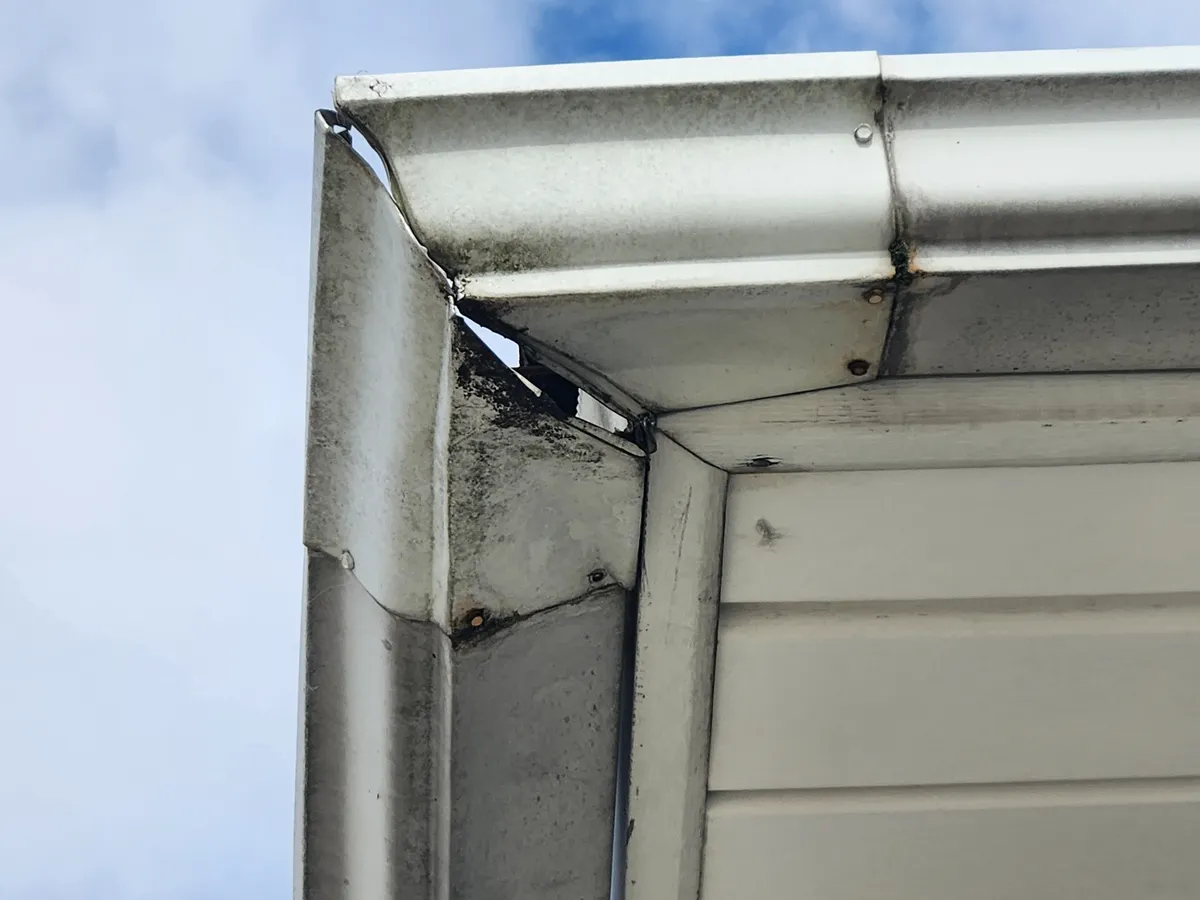
If a section of gutter gets bent or dented hard enough, it can sag slightly out of its original pitch. Even a small deviation in slope disrupts water flow and leads to pooling. Damage to corners and endcaps is particularly problematic. These areas are structurally weaker, and a hard hit can compromise them in ways that are hard to repair effectively.
Over time, repeated freeze-thaw cycles in North Carolina winters can also stress corners and seams. Once compromised, they're difficult to restore to original function, and the damage usually signals that replacement is coming sooner rather than later.
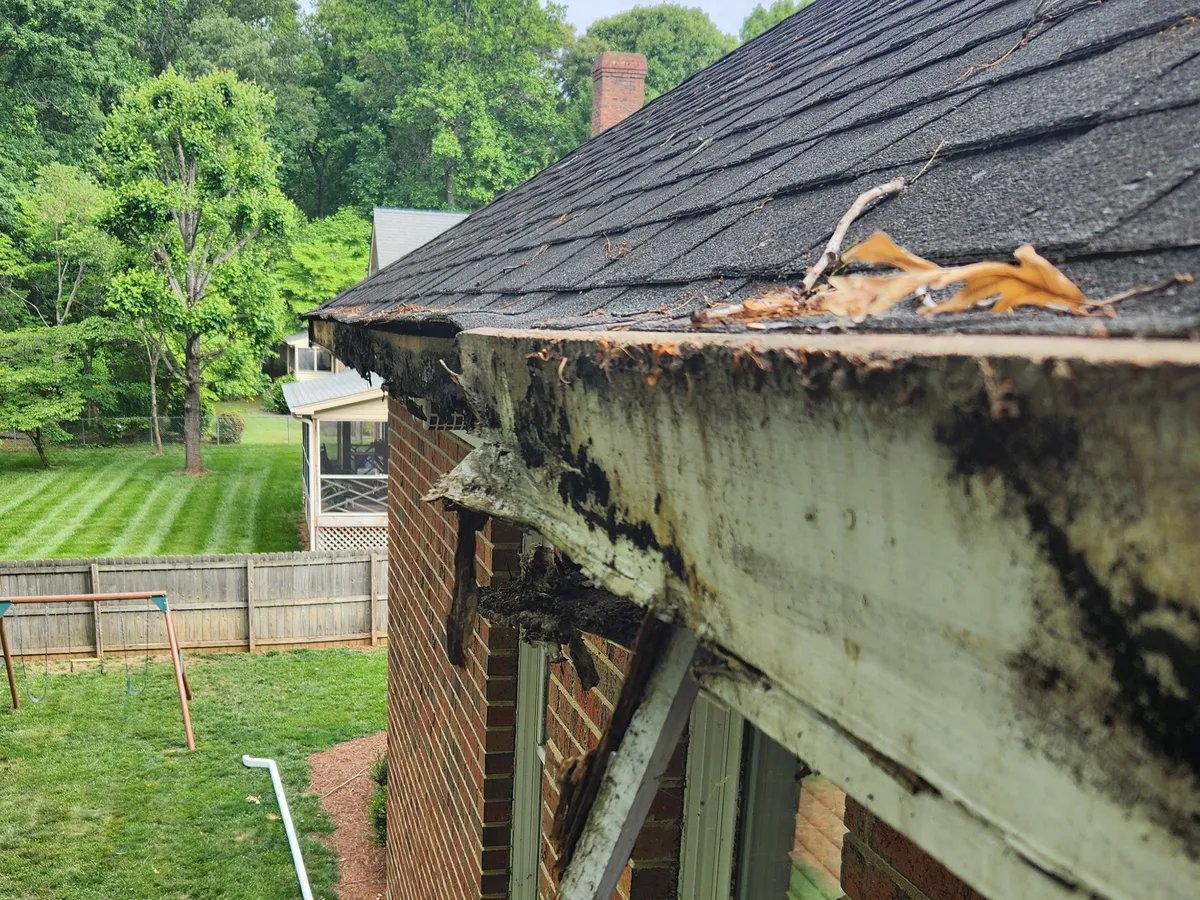
Water Pooling and Persistent Dripping (After Rain Stops)
Here's a distinction that catches a lot of homeowners off guard: a gutter can leak without having a hole in it.
If you see water pooling in sections of the gutter during rain, and then it slowly drips or drains for hours after the rain stops, that's a drainage problem. The gutter isn't moving water efficiently toward the downspouts. This could be because the pitch is wrong, the gutter is sagging (which we covered above), or the downspout can't handle the volume of water reaching it.
Persistent dripping also happens when gutters are clogged with debris that slows water flow. But if you've cleaned the gutters and the water still pools and drips slowly, the gutter system itself isn't designed correctly. In central North Carolina, this problem gets worse in spring when we see heavy, sustained rainfall.
Over time, that pooled water weakens seams and can eventually lead to leaks through the gutter itself. Addressing the drainage problem, whether through repositioning, adding downspouts, or replacing the system, stops the water damage before it starts.
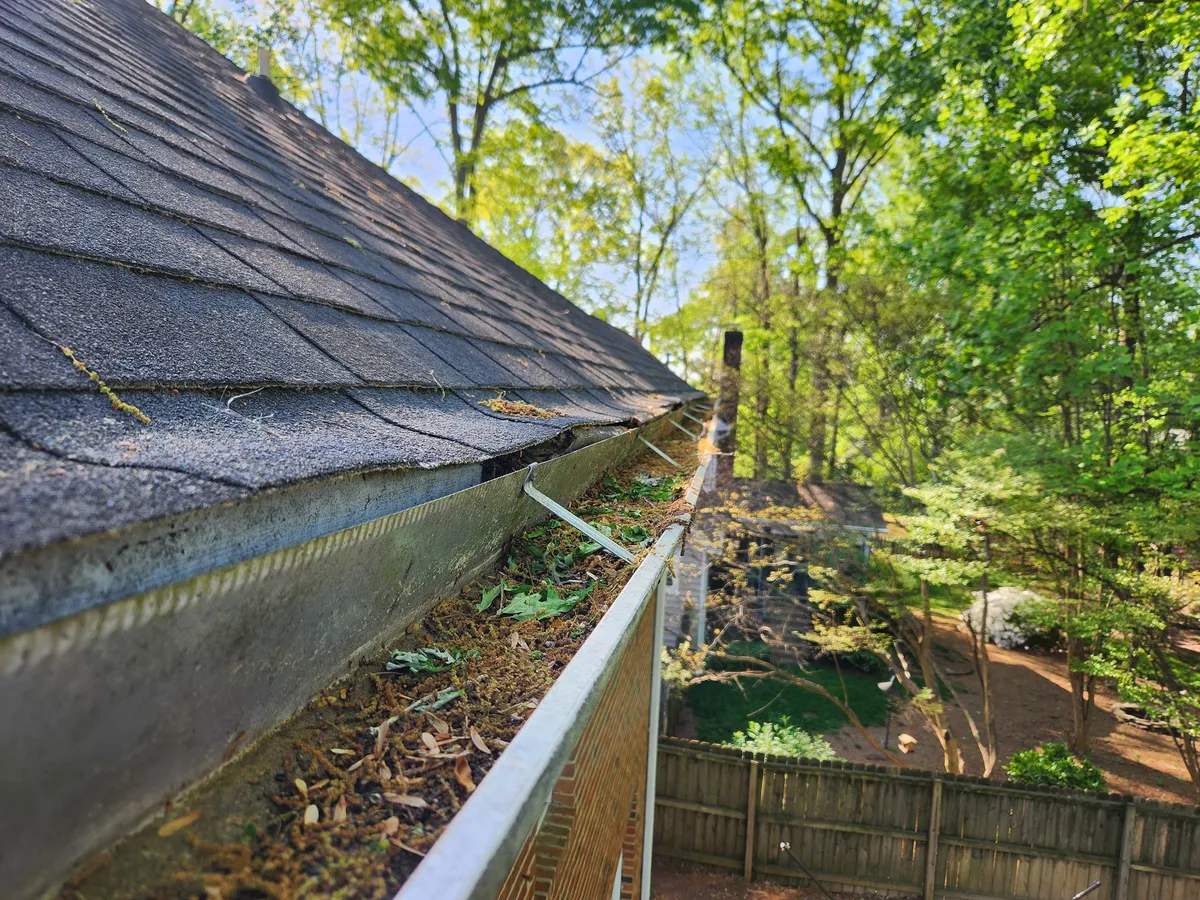
Overflow During Light Rain: A Sign Your System Is Undersized
If your gutters overflow during a moderate or even light rain, don't assume the gutters are damaged. Often, the gutter system is simply too small for the roof area or the rainfall intensity in your region.
Overflow means one of three things: the gutters don't have enough capacity for the volume of water they're receiving, there aren't enough downspouts to move water away quickly, or the downspouts themselves are undersized. This is a system design problem, not necessarily a gutter failure.
Here in central North Carolina, we can get heavy, fast rainfall. A 5-inch K-style gutter might be adequate for a smaller roof in a dry climate, but undersized for the water volume coming off a 2,000-square-foot roof during one of our spring storms. Similarly, if your house has only one downspout handling runoff from multiple roof sections, overflow is inevitable.
If overflow is your main issue, you have choices: expand the gutter capacity, add more downspouts, or upgrade to a larger gutter profile. A professional inspection will tell you which fix makes sense for your roof and site.
Mold Stains or Water Damage on Fascia and Soffits
Walk around the outside of your house and look closely at the fascia board (the board your gutter attaches to) and the soffit (the underside of the overhang). Do you see dark stains, water streaks, or visible mold growth?
These are signs that water has been getting behind or underneath your gutters for a while. Once water breaches the fascia, it doesn't take long for the wood to start rotting. Soffit damage leads to moisture problems in the attic and can compromise your roof structure over time.
If the staining is limited to a small area, it might be fixable with gutter repair and sealing. But if staining is widespread or you see soft spots in the wood, the fascia or soffit may need replacement too. That's a bigger job, and it's often triggered by years of gutter failure.
Address gutter problems early, before they cascade into soffit and fascia damage.
Your Gutters Are More Than 20 Years Old and the Attachment System May Be Failing
Aluminum gutters typically last 20 to 30 years. But after two decades, the real problem isn't always the gutter itself. It's the attachment system.
Older gutters were fastened to the fascia with spikes and ferrules (sleeves). Over the years, these spikes loosen from wood movement and thermal expansion. You might notice the gutter pulling away from the house at certain points, or hanging slightly lower in spots.
The instinct is to tap the spikes back in. But here's the problem: the hole in the fascia board gets bigger every time you tap a spike. Eventually, the spike won't hold anymore because there's no solid wood left. You end up replacing the fascia, the gutter, or both.
Once gutters reach their late teens or early twenties, the spike and ferrule system is often at the end of its life. That's a primary reason we recommend replacement rather than repeated repairs. A modern hanging system uses better brackets and hardware that won't loosen the same way.
If your gutters are 20-plus years old, a professional inspection will tell you whether the attachment system is still solid or whether replacement is the smarter move.
Repair vs. Replacement: When to Call a Professional
Not every gutter problem requires replacement. A single hole can be patched. A loose seam can be re-caulked. Minor sagging in a short section can sometimes be corrected by adjusting hangers.
But if you're seeing multiple issues (sagging, pooling water, scattered damage, age approaching 25 years), replacement is the smarter choice. A professional can assess whether repair makes sense or if you're just delaying the inevitable.
We offer free inspections for Alamance County homeowners and the surrounding area. We'll evaluate the structural integrity, drainage design, and condition of the fascia. That assessment tells you exactly what your gutters need.
If repair is an option, we'll explain it. If replacement makes more sense, we'll walk you through the process and timeline. And if you have significant tree coverage, it's worth discussing gutter guards at the same time. Installing them with a new system is the most cost-efficient approach.
What New Gutters Cost in North Carolina
Gutter replacement typically runs between $1,200 and $3,500 for a typical single-family home in North Carolina, depending on the roof size, gutter material, and the extent of any fascia repair needed.
A basic aluminum 5-inch K-style gutter system costs less than a 6-inch system or premium materials like copper or steel. If fascia boards need replacement (because they've rotted from water damage), that work adds to the cost.
We always provide an itemized quote upfront, so you know exactly what's included. There are no hidden fees, and we discuss material options and their trade-offs.
The cost of replacement is often less than the cost of water damage to your home's foundation, attic, or interior walls. Catching gutter problems early prevents exponentially more expensive repairs down the road.
FAQ
When is the best time to replace gutters in North Carolina?
Spring and early summer are ideal. Weather is mild, and you're not racing against winter weather. Fall can work, but we recommend avoiding winter when ice and heavy snow make the job harder and more dangerous.
What's included in a professional gutter replacement?
We remove the old gutters, inspect and repair fascia boards if needed, install new gutters with proper pitch and hanger spacing, install new downspouts, and clean up the site. We ensure the system is designed for your roof's pitch and square footage.
Will new gutters help protect my foundation?
Yes. A properly designed gutter system moves water away from your foundation. When gutters overflow or fail, that water saturates the soil around your footings. Over time that causes settling, cracking, and in severe cases, basement water intrusion. Gutters are the first line of defense.
Should I add gutter guards when replacing gutters?
If you have significant tree coverage, yes. Installing gutter guards at the same time as new gutters is the most cost-efficient approach since the system is already being set up. Guards reduce cleaning frequency and prevent the debris buildup that leads to overflow and premature gutter failure.
If you're seeing any of these signs, don't wait. Water damage accelerates quickly, and the longer you wait, the more expensive the repair. Call us for a free inspection. We'll tell you exactly what your gutters need, whether that's a simple repair or a full replacement.
Ready for a Free Estimate?
We serve Mebane, Burlington, Graham, and all of Alamance County.