

A gutter guard is a gutter guard, right? That's what most homeowners think when they see the white plastic guard sections stacked up at the big-box store, sold in three or four foot pieces for a few dollars apiece. They clip them on themselves over a weekend, pick up a good deal from the neighbor down the street, or accept them as a freebie from a low-bid contractor. Either way, they figure the problem is solved.
Two summers later, we get the call. The gutters are overflowing worse than they did with no guards at all, water is staining the siding, and the homeowner can't figure out what changed.
Here's what we find when we get there.
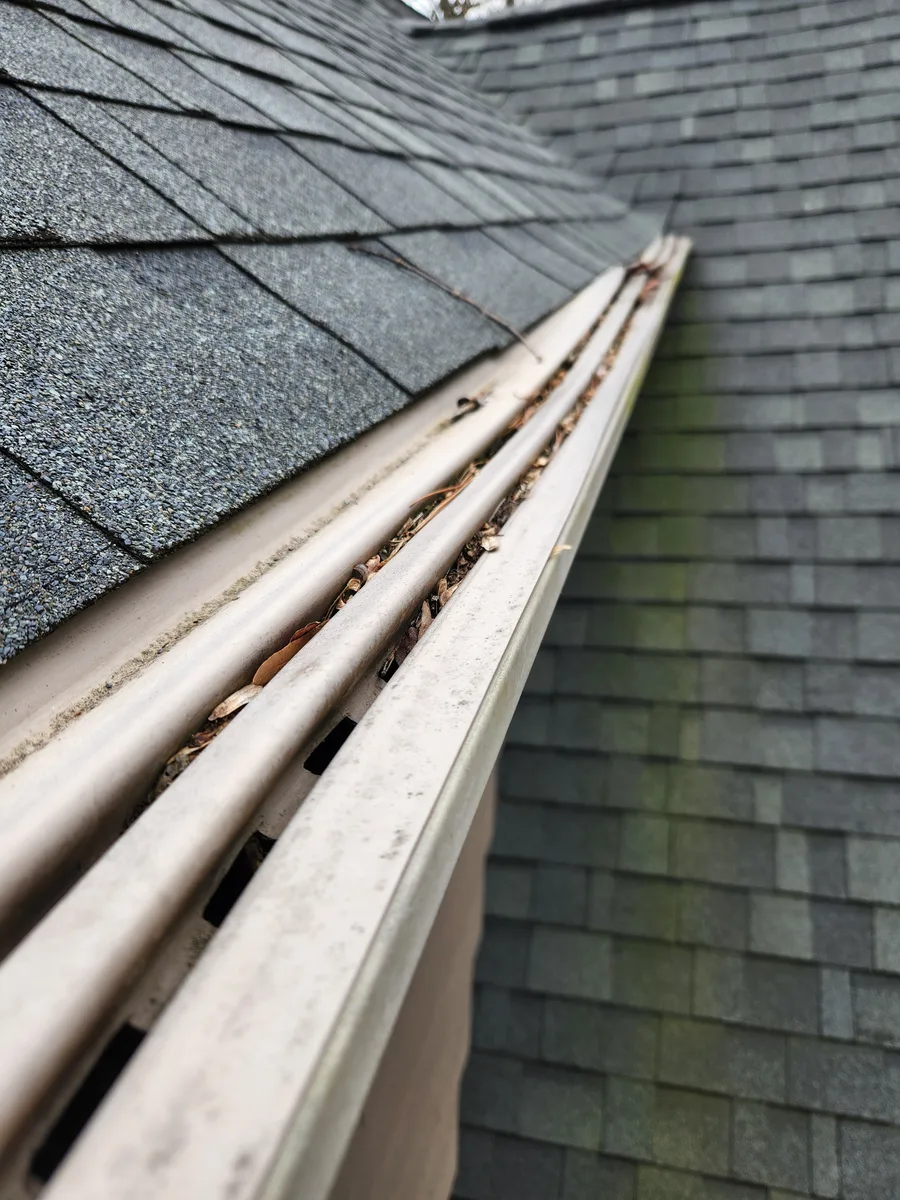
What Plastic Gutter Guards Look Like After Two NC Summers
Alamance County summers aren't gentle on plastic. South-facing eaves in Burlington, Graham, and Mebane sit in direct sun for eight to ten hours a day, and the metal gutter underneath holds and amplifies the heat. The plastic sitting on top cooks.
After two seasons of that, the color fades from black to a chalky gray. Panels warp and lift off the gutter lip. The edges go brittle. We can usually snap a two-year-old plastic panel in half by hand without much effort. That's the condition of the piece of the system that's supposed to keep debris out of your gutters for the next fifteen or twenty years.
The damage isn't even. South and west-facing eaves go first because they take the most sun. North-facing runs on the same house can still look almost new while the front of the house is failing. Most homeowners never notice until they're up on a ladder for an unrelated reason.
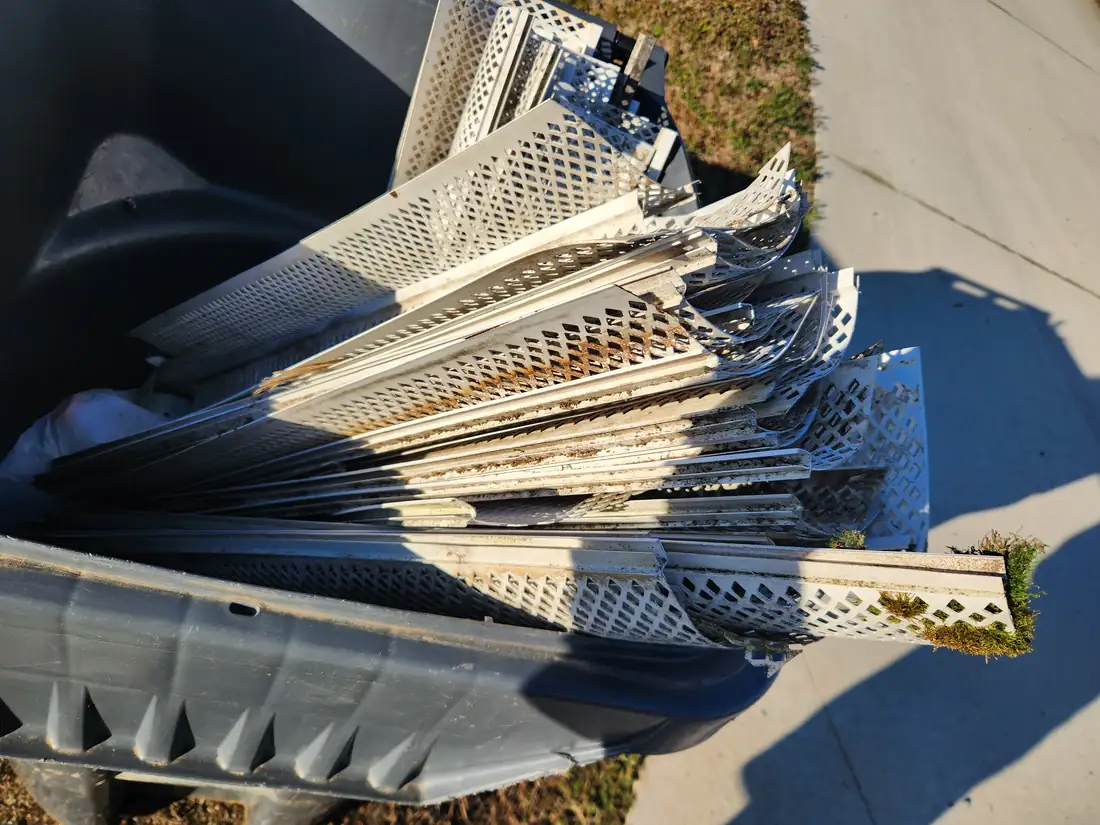
How Plastic Guards Trap More Debris Than They Block
This is the part most homeowners don't expect.
A working gutter guard sheds debris. Leaves blow off in the wind. Pine needles slide off. Water passes through to the gutter. A flat plastic screen does the opposite. The holes are small enough to catch pine needles, oak catkins, and maple helicopter seeds, but the surface is flat and rough enough to hold them.
Once a debris mat forms, it doesn't blow off in the next storm. It gets wet, gets heavier, and stays put. The next rain hits the mat instead of the gutter. Water runs across the top of the guard, over the front lip, and down your siding. From the ground it looks like the gutter is overflowing. The gutter is actually bone dry.
The fine stuff that does make it through, shingle grit, pollen, small seeds, piles up inside the gutter where you can't reach it without taking the guard off first. So you end up with debris in two places: matted on top and packed underneath. Open gutters at least let you clean them.
A lot of the plastic panels we see also have hole patterns wide enough that seeds, twigs, and shingle granules drop straight through. Once that mix gets wet and stays wet, it starts composting in place. We've pulled guards off homes around Alamance County and found a layer of black, decomposed soil at the bottom of the gutter, with maple seedlings and weeds sprouting through the holes in the panel by spring. A gutter that's been ignored long enough turns into a planter, and the plastic guard on top is part of how it got there.
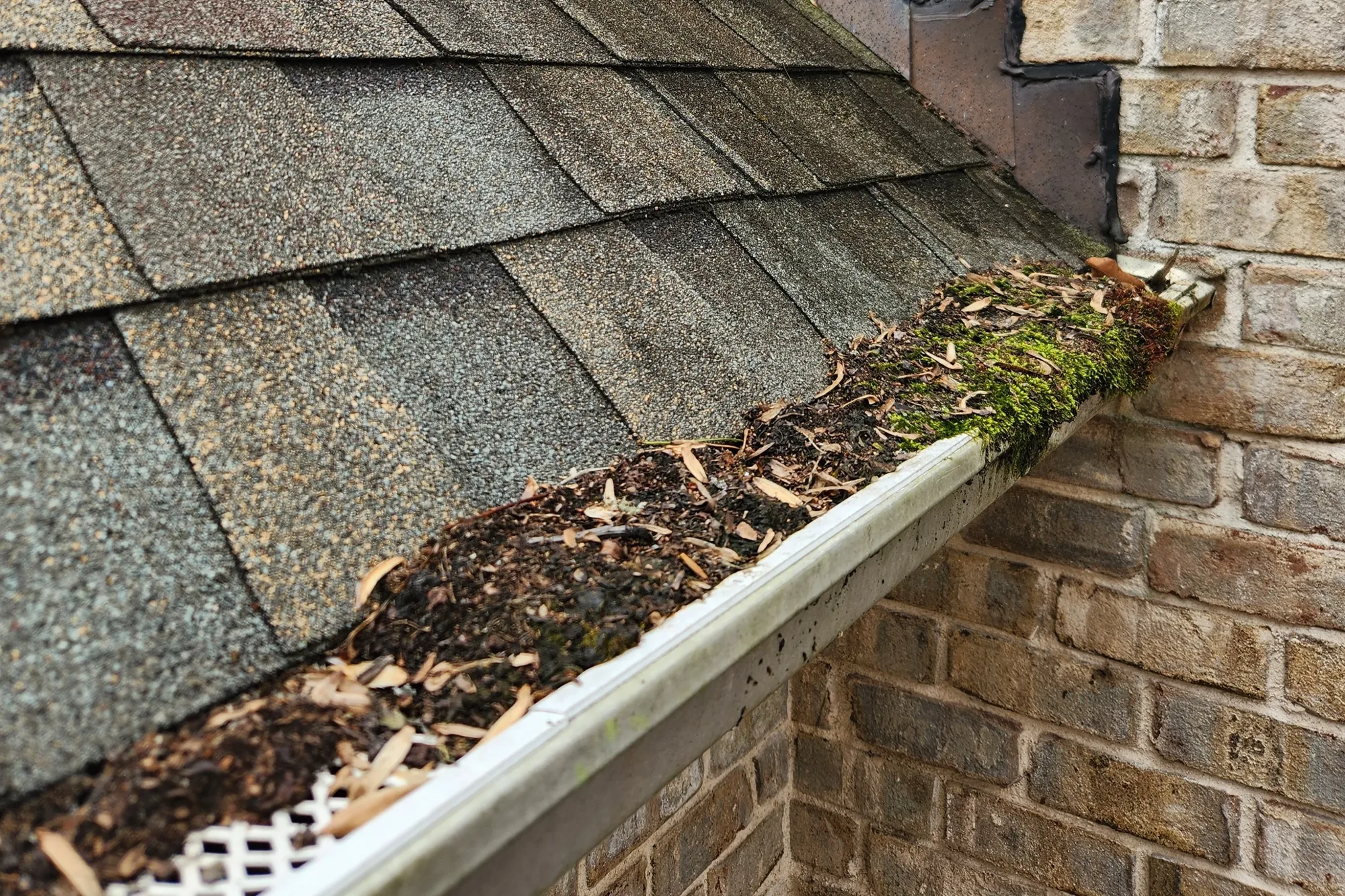
What Happens When Water Cannot Get Through Your Gutters
Once water starts spilling over the front of the gutter instead of through it, the damage chain starts, and it doesn't stop on its own.
Water hits the fascia board behind the gutter. Wood fascia stays wet, paint peels, and rot sets in. Once the fascia is soft, the gutter spikes or hangers lose their grip, and the gutter starts to sag and pull away from the house. We covered this in detail in our post on fascia rot, and plastic guards are one of the more common causes we see.
Below the fascia, water sheets down the siding and pools at the foundation. In Alamance County, where summer thunderstorms can drop rain at inches per hour, one season of overflow puts a lot of water against the foundation that should have gone out a downspout. We see basement seepage, mulch washouts, and erosion right next to the house.
By the time we're called out to look at a guard problem, we're often quoting fascia replacement and repair work alongside the guard removal.
Why Snap-In Plastic Guards Pop Out of Your Gutters
Most plastic guards don't fasten down to anything. They snap onto the front lip of the gutter and either tuck loosely under the shingle edge or sit on top. Either way, they're held in place by friction and gravity, and that's not enough.
Things we've seen pop plastic guards out of place:
- Wet leaf weight after a heavy rain
- Wind from a summer thunderstorm
- Squirrels and raccoons digging for nesting material
- Ice load in January and February, since we do get a few decent ice events here most winters
- A ladder bumping the edge during a cleanout
Wind is the one that does the most damage. A panel that breaks loose in a thunderstorm doesn't just slide back into the gutter, it sails off the roof. Now you have a three or four foot section of gutter wide open. Every leaf on that side of the house funnels straight into that opening on the next rain, and the rest of the gutter, still covered by the panels that are holding, can't help share the load. Debris piles up in one concentrated spot you can't easily reach. The system ends up worse than it would have been with no guards at all.
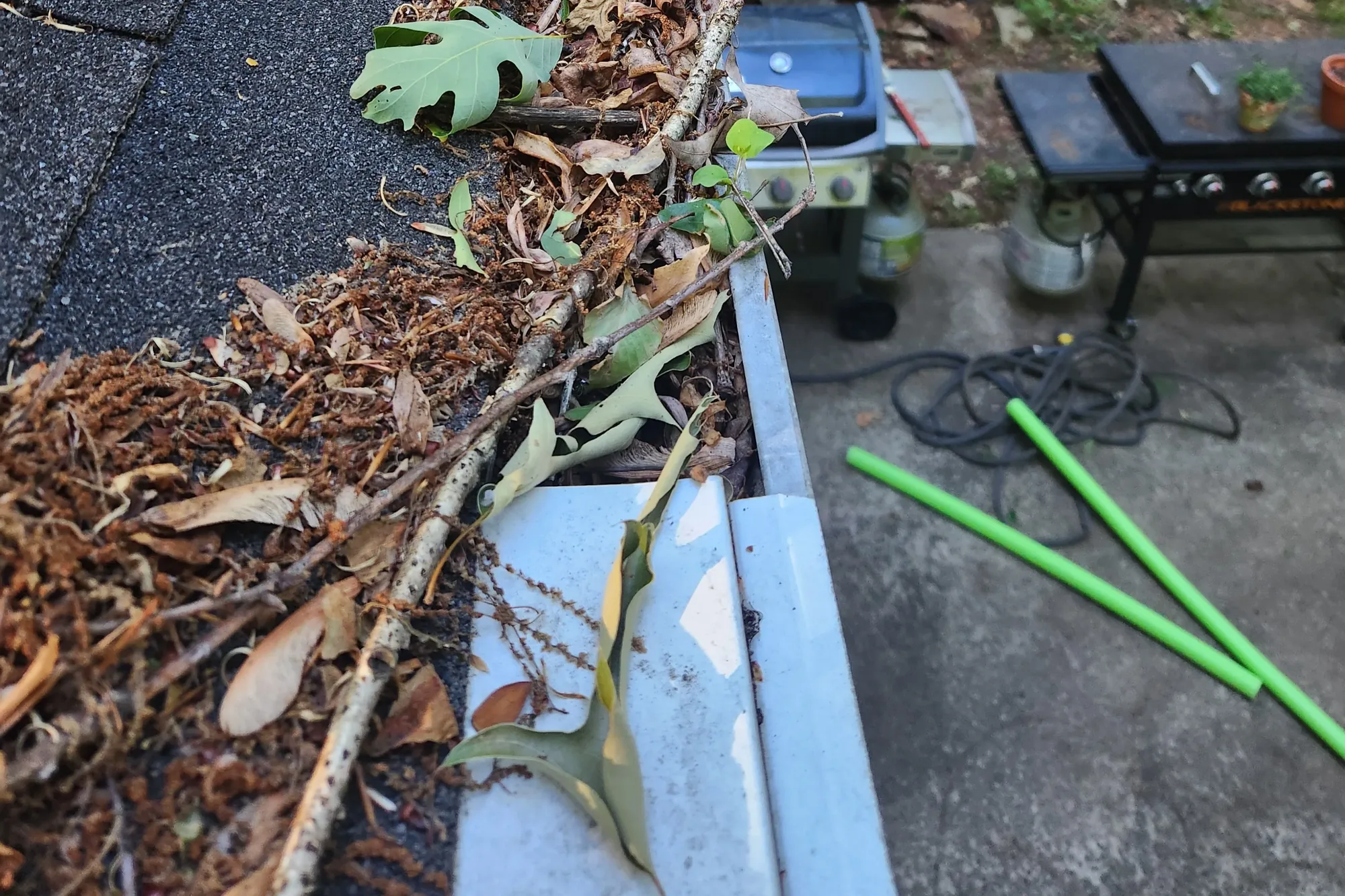
What We Install on Alamance County Homes Instead
When we install gutter guards, we install metal. Aluminum or stainless micro-mesh, properly fastened so the system stays put through wind, ice, and animals. The materials cost more. The labor is more careful. The installed price is several times what a clip-on plastic kit costs at the store.
It's also the last gutter guard most homeowners ever buy. A good metal system, installed correctly, will often last as long as the gutters themselves on most homes.
We'll go deeper on what to look for in a metal guard system in a separate post. The short version: a plastic guard that just snaps onto the gutter, regardless of brand or color, is a two-summer product on most NC homes.
If you already have plastic guards on your home and you've been seeing water spill over the front of the gutters when it rains, we're happy to come out and take a look. Even if the gutters themselves are still in good shape, getting failing guards off and getting your gutters properly cleaned out can save you a fascia bill down the road.
Frequently Asked Questions
Are plastic gutter guards worth the money?
For most Alamance County homes, no. The upfront cost is low, but the panels don't last more than two or three summers in our climate, and the time you spend cleaning matted debris off the top is often more than you'd spend cleaning open gutters in the first place. A lot of the homeowners we see end up paying twice: once for the plastic kit, and again to have it removed and a working system installed.
How long do plastic gutter guards last in North Carolina?
Two to three summers before the UV damage and heat warping are obvious. By the four or five year mark, most panels we pull off come off in pieces. South and west-facing eaves go first.
Can plastic gutter guards be cleaned and reused?
Sometimes, if you catch the debris mat before it has decomposed into a packed layer of leaves and seeds. Most homeowners don't. By the time the symptoms show up at ground level, the guards are usually warped or brittle enough that taking them off breaks them, and reinstallation never sits right.
What is a better alternative to plastic gutter guards?
A properly installed metal guard system, especially the strainer-type stainless micro-mesh. The installer and the install method matter as much as any single brand. It's a bigger upfront investment, and it's usually the last gutter guard you buy for that house. We cover this on our gutter guard installation page.
If you're in Mebane, Burlington, Graham, Hillsborough, or anywhere in Alamance County and you have plastic gutter guards on your home that you're starting to second-guess, we'll come out and tell you honestly what shape they're in.
Request a free estimate or call us directly at (336) 269-7345.
Ready for a Free Estimate?
We serve Mebane, Burlington, Graham, and all of Alamance County.